
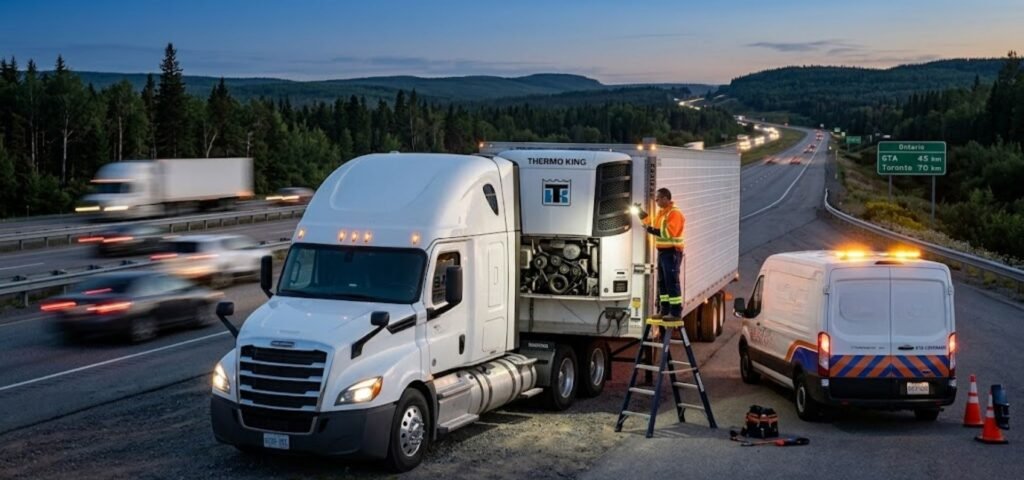
There is a specific kind of stress every haul driver knows all too well. You are five hours into a long stretch, hauling a full trailer of frozen meat, fresh produce, or high-value pharmaceuticals. You glance at your side mirror or check your status monitor, and there it is: a warning light, or worse, a temperature reading that is slowly crawling upward into the danger zone.
When pulling a refrigerated trailer (reefer), it isn’t just about driving a truck—it’s about managing a mobile cold-storage warehouse. If the temperature slips outside the required range, even by a few degrees, the whole load can be rejected at the receiver’s dock. That means lost time, wasted fuel, massive insurance headaches, and thousands of dollars down the drain.
Understanding why reefer units fail, how to troubleshoot them under pressure, and knowing when to call in the pros can save the load, the schedule, and sanity.
The Top Reasons Reefer Units Fail on the Highway
Reefer engines are heavy-duty workhorses, but they operate under brutal conditions. From long idle hours to constant road vibrations, several common issues can cause a system shutdown or temperature drop.
Airflow Obstructions and Poor Loading: Sometimes the reefer unit itself isn’t broken, but cold air simply can’t circulate. If freight is packed too high against the ceiling or loaded tight against the sidewalls without proper chute clearance, hot spots form near the rear doors.
Fuel Line Air Locks or Contaminated Fuel: Reefer units rely on their own diesel supply. Running out of fuel—or getting air/dirt trapped in the fuel lines—causes the unit to sputter out. Even after refilling, an air-locked system will refuse to restart without manual priming.
Electrical System and Sensor Errors: Modern units depend on complex sensors, belts, microprocessors, and starter batteries. A frayed wire, corroded terminal, blown fuse, or faulty temperature sensor (microprocessor error) will throw an alarm code and force the unit into safety shutdown.
Refrigerant Leaks: Vibrations from highway travel can loosen fittings or cause micro-fractures in copper lines, leading to a loss of Freon. If the compressor runs continuously without cooling the box down, a leak is often the culprit.
Broken Belts and Hoses: Alternator belts, fan belts, and coolant hoses wear down over time. A snapped belt instantly stops cooling, causing engine temperatures to spike rapidly inside the unit.
Step-by-Step: What to Do When the Reefer Light Turns Red
When a reefer alerts to an alarm code, panic won’t help—quick, systematic troubleshooting will. Here is an emergency checklist to use when pulled over in a safe area:
Step 1: Check the Basics First
Before diving into complex diagnostics, verify the simplest potential causes:
Fuel Level: Check the reefer fuel tank gauge directly. Do not rely entirely on the digital readout.
Door Seals: Ensure the rear and side doors are completely sealed and latched properly. Damaged gaskets leak cold air rapidly.
Clear Codes: Note down the alarm code displayed on the interface (e.g., Thermo King or Carrier screen), then attempt a system reset to see if the code clears or immediately returns.
Step 2: Inspect Airflow and Box Interior
If the unit is running but failing to lower the temperature:
Check the evaporator fan to ensure it is blowing air smoothly.
Inspect the bulkheads and return-air grilles for plastic wrap, fallen boxes, or ice buildup.
If top-air chutes are torn or detached, cold air will dump near the front instead of reaching the back of the trailer.
Step 3: Visual Inspection Under the Hood
Turn off the ignition, lock out the unit, and open the reefer side doors:
Belts: Check for frayed, loose, or snapped belts.
Fluid Levels: Check engine oil and coolant levels.
Battery: Look for loose or corroded battery terminals.
Leaks: Look for oily residue along refrigeration lines, which typically points to a Freon leak.
Prevention: The Daily Pre-Trip Reefer Checklist
The best way to fix a reefer issue is to prevent it before hitting the highway. Incorporate these checks into the daily routine:
Perform a Full Pre-Cooling Cycle: Always pre-cool the trailer to the required setpoint before loading product. Never rely on the reefer unit to cool down a warm box filled with warm cargo.
Run a Manual Defrost Cycle: Before picking up the load, run a manual defrost to clear any frost or ice accumulation off the evaporator coils.
Inspect Belts and Hoses: Give belts a quick tug to check tension and inspect hoses for dry rot or fluid drips.
Keep the Reefer Tank Full: Never start a run with less than a three-quarters tank of reefer diesel to prevent drawing sediment from the bottom of the tank into the injectors.
When Repairs Can't Be Handled Alone: Mobile Emergency Service
Even the most experienced operators hit a wall. When a drive belt snaps in half, a compressor seizes, or an alarm code refuses to clear while parked on the side of the highway with thousands of dollars of perishable freight cooling down, fast and professional mobile repair is essential.
For those hauling through the Greater Toronto Area (GTA) facing a sudden reefer emergency, Road Safe is the ideal partner on the road.
At Road Safe, the team understands that in the cold-chain industry, time is money and temperature is everything. Waiting hours for a tow or morning garage openings isn’t an option when cargo temperature is climbing.
Why Drivers and Fleets Count on Road Safe:
24/7 Emergency Mobile Dispatch: Day or night, weekends or holidays, emergency mobile repair units are ready to roll anywhere across the GTA.
Comprehensive Reefer Repairs: From Thermo King and Carrier diagnostic troubleshooting, belt and hose replacements, to system leaks and fuel priming—repairs are handled right on site.
Minimized Downtime: Fully equipped service trucks bring the tools and parts directly to the rig, getting the cooling unit operational to protect the load and complete the delivery safely.
Don’t let a breakdown ruin a haul. Save Road Safe in your contacts, hit the road with peace of mind, and drive safe knowing expert help is always just a phone call away anywhere in the GTA!
Frequently Asked Questions
What are the most common causes of reefer unit failures?
Common issues include low fuel/air-locked fuel lines, snapped belts, refrigerant (Freon) leaks, electrical/sensor code errors, and blocked airflow due to improper cargo loading.
How fast can Road Safe respond to an emergency reefer breakdown in the GTA?
We offer 24/7 emergency mobile dispatch across the Greater Toronto Area (GTA) to reach your location as quickly as possible and minimize cargo temperature loss.
Can mobile repair technicians fix Thermo King and Carrier reefer units on-site?
Yes. Mobile technicians carry diagnostic tools, replacement belts, hoses, and fuel priming equipment to resolve most Thermo King and Carrier alarm codes directly on the roadside.
What should I do immediately if my reefer temperature starts rising?
Pull over safely, check the physical fuel level, clear any cargo blocking the air chute, inspect for loose belts or leaks, and call a mobile reefer repair service if the issue persists.
How can I prevent reefer breakdowns during long hauls?
Always pre-cool the trailer before loading, run a manual defrost cycle, inspect belts and hoses during pre-trip checks, and keep your reefer fuel tank at least three-quarters full.
