
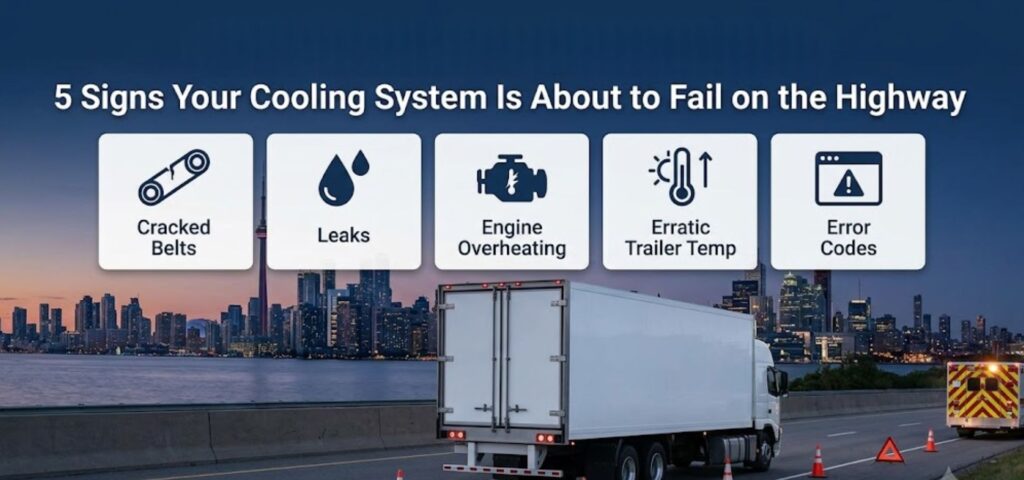
Driving a temperature-controlled commercial truck through the Greater Toronto Area (GTA) is a high-stakes, high-pressure job. The highway networks connecting Toronto, Mississauga, Brampton, and Cambridge are some of the busiest corridors in North American logistics. When you are moving highly sensitive freight on these crowded routes, a sudden mechanical failure is your absolute worst nightmare. A breakdown doesn’t just mean standard operational downtime; it puts your entire load at immediate risk of cargo rejection, leaving you with massive claims, lost payouts, and damaged relationships with your dispatchers.
The harsh reality of logistics is that temperature-sensitive cargo waits for no one. Whether you are hauling fresh produce, frozen dairy products, or critical pharmaceuticals, a breakdown means the clock starts ticking against your trailer’s internal temperature. Fortunately, commercial cooling units rarely fail without dropping hints first. Most mechanical and electrical issues develop over time and give off clear warning signals before the engine completely shuts down.
By training yourself to spot these 5 critical warning signs early during your trips or pre-trip inspections, you can take fast, preventative action before your trailer temperature climbs and your cargo is ruined.
1. Cracked Belts
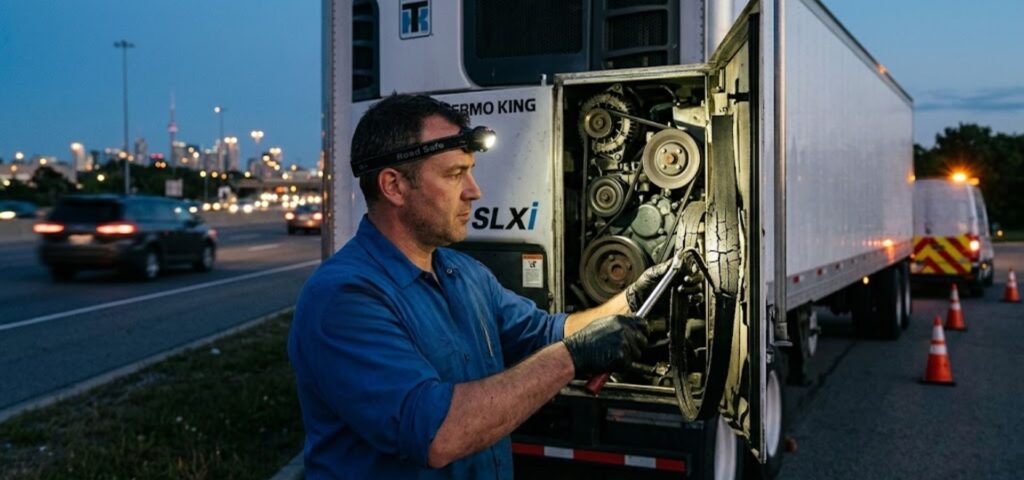
Your trailer’s cooling unit operates with a very distinct, steady mechanical rhythm when it is functioning properly. As an experienced driver, you know exactly what your truck and trailer sound like when everything is running smoothly. The moment that familiar background hum turns into something irregular, you need to pay immediate attention.
Loud squealing coming from the front of your trailer is a clear red flag. A sharp squealing sound usually indicates that a belt is either slipping, improperly tensioned, or severely cracked and fraying. Belts bear the brunt of constant operational stress. A cracked alternator or compressor belt might look like it can handle one more trip, but under the high pressure and heat of highway driving, a damaged belt can snap within seconds. Once that belt snaps, the entire charging or cooling process stops instantly. Ignoring these sounds while driving down the highway is a guaranteed way to turn a minor belt adjustment into a catastrophic roadside failure.
2. Leaks
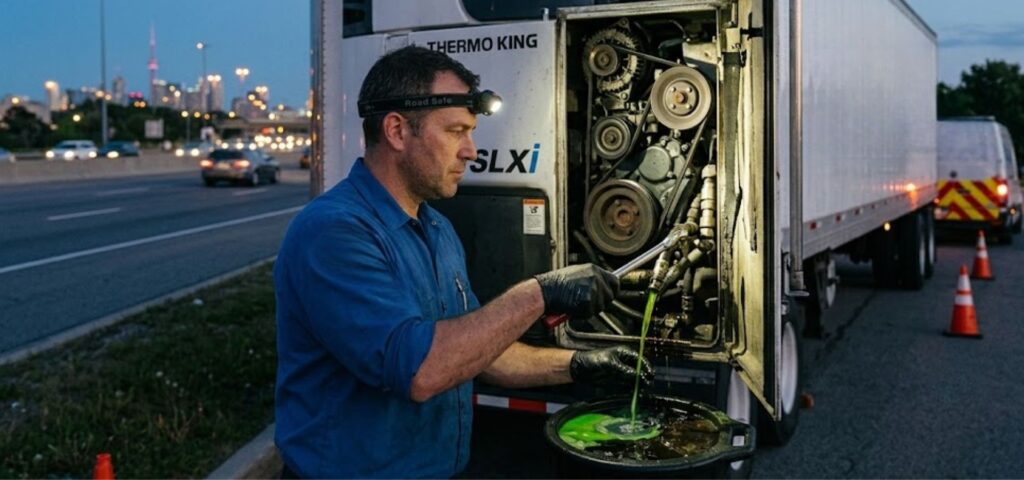
Whenever you pull into a truck stop, warehouse bay, or staging area anywhere in the GTA, make it a habit to check the ground directly underneath your trailer’s front unit. Finding puddles or fresh drops of fluid is a clear sign that you have an active fluid leak that requires immediate mechanical attention.
You must check all rubber hoses for soft spots, bulging areas, or brittle cracks. Worn coolant hoses are highly susceptible to bursting under standard system pressure. Bright green fluid indicates an engine coolant leak, while dark, thick fluid points to an engine or compressor oil leak. A coolant leak is especially dangerous because the small engine powering the cooling system relies entirely on proper fluid levels to regulate heat. The moment the fluid drops below a safe operational threshold, the unit’s built-in safety sensors will automatically kill the engine to prevent total seizure. If this happens while you are stuck in heavy traffic on the highway, you will be left stranded with a rapidly warming trailer.
3. Engine Overheating
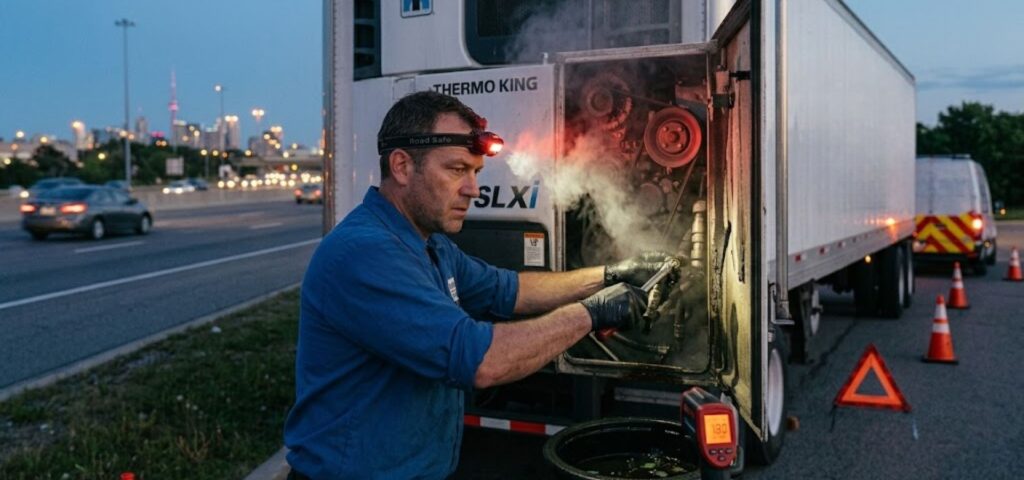
Just like your truck’s main engine, the dedicated motor powering your reefer unit relies on a perfectly balanced cooling environment. When a system suffers from a lack of coolant, restricted airflow through the condenser coils, or a broken water pump, the engine temperature will spike rapidly into the danger zone.
An overheating engine is a critical emergency. If the unit runs too hot for even a short period, it triggers an automatic emergency thermal shutdown to prevent the entire block from cracking or seizing completely. Driving with an overheating reefer unit down the highway means you are actively running on borrowed time. If you notice the engine temperature gauge climbing abnormally or smell burning oil and hot metal from the cab, you need to address the issue before the system turns itself off automatically in the middle of a busy lane.
4. Erratic Trailer Temp
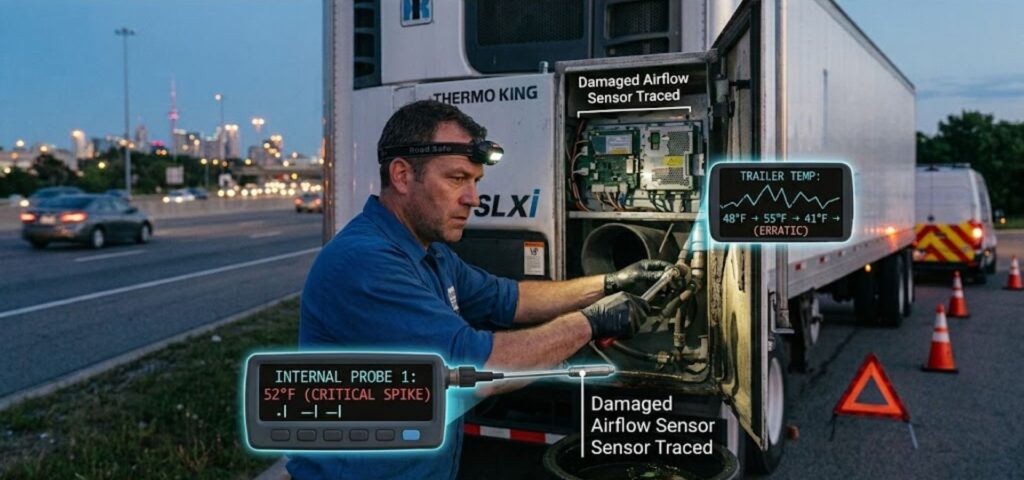
The primary job of your cooling system is to maintain a completely steady, locked-in box temperature, regardless of the weather conditions outside. If you check your in-cab monitor or trailer display and notice that the temperature readings are constantly bouncing up and down, something is fundamentally wrong with the system’s efficiency.
Even if the temperature eventually drops back down to your target set-point after a sudden spike, these constant fluctuations mean the system is working far harder than it should. This erratic behavior is often caused by restricted airflow, a failing sensor, microprocessors acting up, or the early stages of low refrigerant levels. When a system cycles irregularly just to keep up with demand, a total electronic or mechanical shutdown is usually just a few miles away.
5. Error Codes
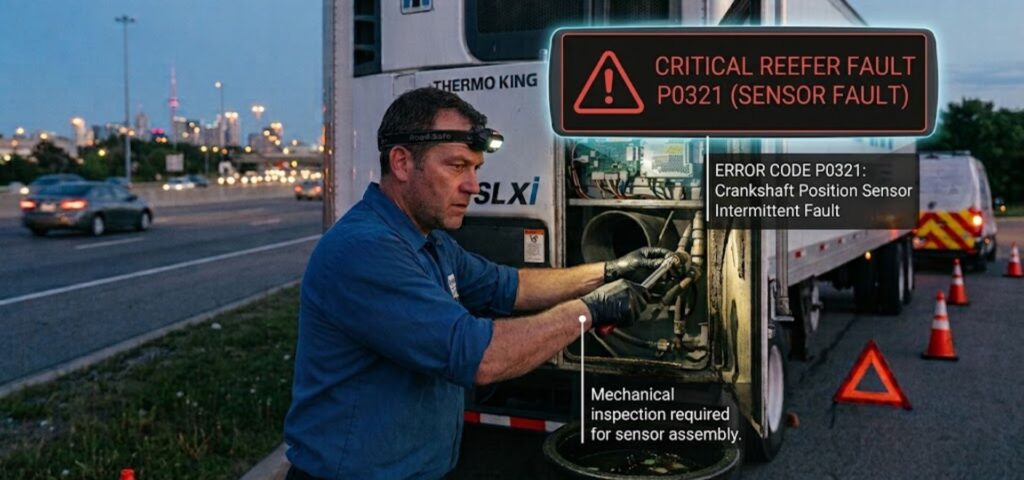
Modern commercial cooling units are highly sophisticated machines equipped with advanced onboard diagnostics. When something begins to drift outside of safe operational limits, the display screen on your controller will start flashing specific error codes or critical warning alerts.
One of the biggest mistakes a driver can make is clearing an active error code simply because the unit is still running and holding temperature at that exact moment. Those codes are designed to be an early warning system. They indicate that a vital internal component—whether it is a faulty sensor, a failing microprocessor, an electrical short, or a drop in system pressure—is on the verge of complete failure. Addressing an active code while you are safely parked or near a service bay prevents the code from turning into an unmanageable road emergency later on.
Managing Emergencies with Road Safe
If you spot any of these 5 critical warning signs while hauling freight through the Greater Toronto Area, do not take a gamble on the road. Waiting for the system to stop completely before calling for help dramatically increases the risk of losing your entire load and facing massive mechanical repair bills.
Pulling over early on a safe shoulder or exiting the highway allows you to manage the situation before it becomes a full-blown logistical crisis. Keeping the contact details of Road Safe handy ensures that if a belt cracks, a hose leaks, or an error code flashes, you can get the right parts and skilled professional support to fix engine and cooling issues correctly the very first time, keeping your route safe and your payload completely secure.
