
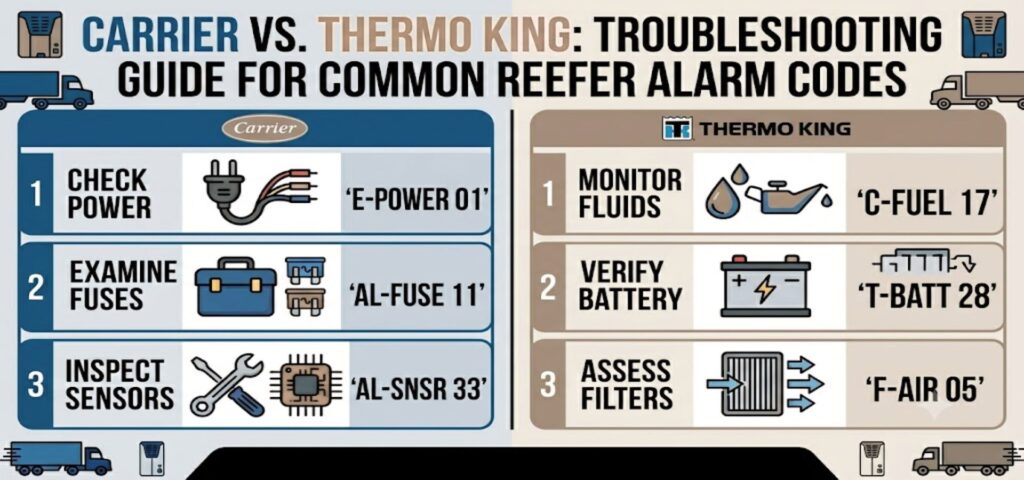
If you operate in the cold chain logistics industry within the Greater Toronto Area (GTA), your refrigerated trailer (reefer) is the heart of your business. Whether you are hauling fresh produce from the Ontario Food Terminal or medical supplies across the 401, a reefer breakdown is a nightmare. It risks thousands of dollars in lost cargo and damages your reputation with clients.
Two major brands—Carrier Transicold and Thermo King—power the majority of the fleets in Canada. While they are both excellent pieces of engineering, their alarm systems, logic, and troubleshooting steps differ. This guide is designed to help drivers and fleet managers in the GTA understand how to handle these common issues, when to try a quick fix, and when to call Road Safe Fleet Solutions for expert help.
Understanding Reefer Alarm Levels
Modern refrigeration units are essentially rolling computers. They are equipped with smart sensors that monitor the engine, the compressor, the fuel system, and the cargo temperature. These units categorize alarms to help you determine the severity of the problem:
Status Alerts: These are “friendly” reminders. They might tell you it is time for an oil change or that the unit is in a specific mode (like electric standby). They are not emergencies.
Check/Warning Alarms: The unit is still running, but something is not quite right. You have time to finish your delivery, but you should have a technician look at it as soon as you are unloaded.
Shutdown/Critical Alarms: The system has detected a major failure and has shut down to prevent permanent damage to the engine or compressor. Do not force the unit to restart if you see these.
Decoding Common Alarm Codes - Thermo King (TK) Numeric Codes
Thermo King units are known for using a numeric code system. If you see one of these, here is the quick interpretation:
Code 00: Everything is running perfectly.
Code 17 (Engine Failed to Crank): This is very common in the GTA, especially during our harsh winters. It usually points to a dead or weak battery, or a frozen starter solenoid.
Code 18 (High Engine Coolant Temperature): Your reefer is overheating. Pull over immediately. Check your coolant levels and look for debris like plastic bags or heavy dust clogging the radiator fins.
Code 19 (Low Engine Oil Pressure): This is a red-flag warning. Stop the engine immediately. Check the oil dipstick. If the oil is low, add more. If it is full but you still get the alarm, you have a serious internal engine problem.
Code 96 (Low Fuel Level): It sounds simple, but many drivers miss this. If you are low on fuel, air can enter the fuel lines, causing the unit to quit.
Carrier Transicold "AL" Codes
Carrier units generally use an “AL” prefix followed by a number.
AL22 (Evaporator Fan Motor Safety): This means the fans inside your trailer aren’t spinning correctly. It is often caused by a blown fuse or debris caught in the fan blades.
AL24 (Compressor Motor Safety): This indicates the compressor is drawing too much electricity or is under too much mechanical stress. This is a “do-not-ignore” alarm.
AL54/AL56 (Sensor Failures): The “brains” of the reefer don’t know what the temperature is. If the sensors fail, the unit may stop cooling entirely to prevent freezing or overheating the load.
AL91 (Alarm List Full): The memory log is full. You may need to have a technician clear the history so you can see if any new errors are popping up.
The Driver’s Troubleshooting Checklist
Before you call for emergency roadside assistance, you can perform a few safe, simple checks to save yourself time and money.
Stay Safe If an alarm sounds on the highway, never stop on the shoulder unless it is an absolute emergency. Find a safe parking lot or truck stop. Never climb onto the trailer to inspect the unit while in traffic.
Check the Load Before worrying about the machine, worry about the cargo. Use a handheld infrared thermometer or your internal data logger to check the actual temperature of the product. If the temperature is holding steady despite the alarm, you have a bit more breathing room.
The “Hard Reset” Many electronic glitches are just “hiccups.” Turn the unit off, wait at least 60 seconds, and turn it back on. This allows the computer to reboot. Crucial rule: If the unit shuts down again immediately with the same critical alarm, stop trying. You are only risking further damage.
Physical Basics
- Airflow: The number one cause of cooling issues is bad packing. Ensure your pallets are not touching the ceiling and are at least 3-4 inches away from the rear doors. The air must be able to circulate!
- Battery: Check the terminals for corrosion. A loose cable in the cold GTA weather will cause all sorts of electrical gremlins.
- Fuel/Filters: Ensure your fuel tank isn’t empty and check for signs of fuel “gelling” in the winter.
When to Call the Experts
While a reset can fix a minor glitch, some problems require professional tools and expertise. Attempting a DIY repair on a complex component like a compressor or an ECU (Electronic Control Unit) can void your manufacturer’s warranty and lead to much higher repair bills.
Road Safe Fleet Solutions specializes in mobile repairs throughout the GTA. We bring the workshop to your location, meaning you don’t have to worry about towing fees or off-route miles. Our technicians are equipped to:
- Perform deep-level diagnostics using proprietary software.
- Replace failing sensors or belts before they break completely.
- Provide 24/7 emergency roadside assistance, ensuring your cargo stays at the right temperature regardless of the time or weather.
Preventative Maintenance: The Secret to Success
The best way to handle an alarm code is to ensure it never happens in the first place. A consistent maintenance schedule is the cheapest insurance policy in the trucking industry. By inspecting your belts, cleaning your coils, and testing your battery health during regular intervals, you can catch 90% of these failures before they happen on the road.
Need Expert Help in the GTA? Don’t let a small alarm turn into a massive insurance claim. If you are in the Greater Toronto Area and need professional, fast, and reliable reefer repair, Road Safe Fleet Solutions is here to keep your fleet moving.
Visit us: https://road-safe.ca/
Call us 24/7: (905) 299-9080
We understand the pressure of the cold chain, and we are committed to getting you back on the road safely and efficiently. Let our experts handle the codes so you can focus on the load.
