
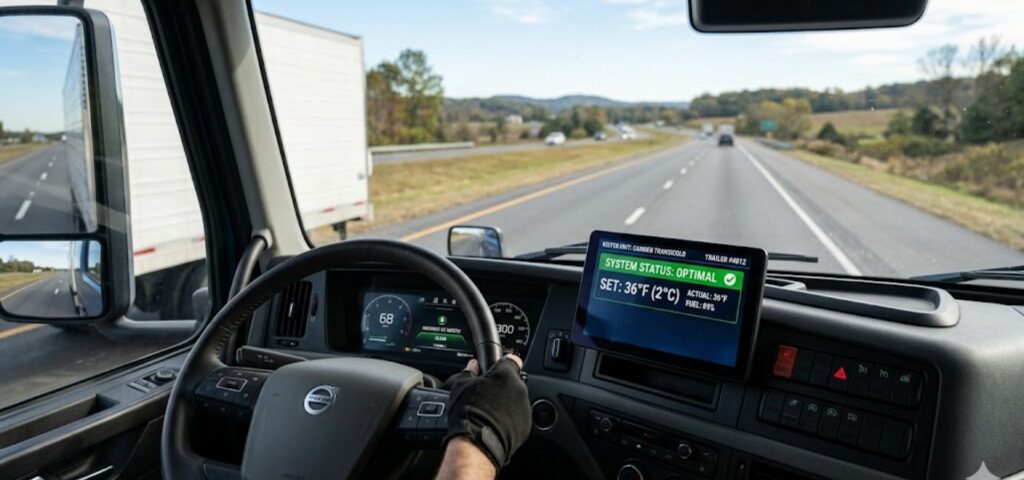
Operating a heavy-duty refrigerated vehicle is far more than just driving from point A to point B. It is a high-stakes balancing act where time, temperature, and technology must remain in perfect sync. As a reefer driver, you are not merely behind the wheel; you are a guardian of precious cargo. When your trailer holds thousands of dollars in perishable goods that could be ruined by a minor temperature deviation, feeling the pressure is only natural. However, at Road Safe, we believe that true professionalism is defined by how you maintain your focus when the stakes are at their highest.
In this guide, we will explore how a reefer driver can protect their mental and physical well-being while mastering the art of staying calm under pressure.
1. The Pre-Trip Protocol: Eliminating Stress at the Source
Stress often finds its footing in uncertainty. If you aren’t completely confident in your equipment or your route before you even turn the key, the looming “what-ifs” will weigh heavily on your mind.
Proactive Preparation:
-
The Technical Audit: Think of your pre-trip inspection as a vital ritual. Check fuel levels, belt tension, and the functionality of the temperature data recorder. Being certain that your equipment is sound creates a psychological baseline of confidence.
-
Route Intelligence: Don’t just rely on GPS. Check weather forecasts for your entire route. Are you passing through extreme heat zones? Adjust your reefer settings ahead of time to accommodate environmental variables.
-
The Road Safe Edge: Always carry an emergency “peace-of-mind” kit. Include basic tools, plenty of water, high-energy snacks, and a few comforts that help you reset. When you know you are prepared for the worst, the stress of the unknown diminishes.
2. Tactical Patience: Navigating Delays and Gridlock
For a reefer driver, a traffic jam isn’t just an inconvenience; it’s a threat to cargo integrity and a drain on fuel. While frustration is a human reaction to being stuck, a seasoned professional knows that losing your temper only drains the mental energy needed to manage the load.
The Mental Shift:
-
Acceptance of the Uncontrollable: You cannot change the traffic, but you have absolute authority over your reaction to it. Channeling energy into anger only increases your cortisol levels and fatigue.
-
Active Recovery: When you are stationary, don’t just sit in the cab stewing. Perform a few light stretches. Long hours in the seat cause physical stiffness, which translates directly into mental tension. Road Safe advocates for movement—even five minutes of stepping out of the cab can reset your nervous system and sharpen your focus.
3. Alarm Management: Taming the Panic Response
The sound of a reefer unit alarm is arguably the most stressful sound a driver can encounter. It is designed to trigger urgency, but in the wrong hands, that urgency turns into panic.
The Systematic Approach:
-
The Safe Pause: If the alarm sounds, resist the urge to react instantly. Find a legal, safe spot to stop.
-
Controlled Breathing: Panic causes shallow breathing, which limits oxygen to the brain. Take three slow, deep, deliberate breaths. This biologically signals your brain to exit “fight-or-flight” mode and engage the logical, problem-solving cortex.
-
Objective Analysis: Instead of frantically tapping buttons, consult your manual. Is this a critical temperature deviation or a minor sensor glitch? Follow your company’s protocols with surgical precision. Remember, you are a trained professional; you are equipped to handle this.
4. Your Cab as a Sanctuary
The cab is your office, your dining room, and your quiet space. If your environment is chaotic, your mind will mirror that chaos.
-
Organized Space: Clutter on the dashboard creates mental “noise.” Keep your workspace tidy to help maintain a clean, clear headspace.
-
Curated Audio: Avoid the constant, anxiety-inducing chatter of news cycles. Instead, curate a playlist of calm music, engaging podcasts, or audiobooks. This creates a psychological buffer against the aggression of the road.
-
Environment Control: Manage your lighting and airflow. A well-ventilated, comfortable cab is a tool for better decision-making.
5. Nutrition and Rest: Your Most Critical Investments
You are an endurance athlete in an industry that demands peak performance. Fatigue is the enemy of calm.
-
Fuelling the Body: Greasy, heavy meals lead to lethargy and energy crashes, making you more susceptible to irritability. Opt for steady-energy proteins and fresh produce.
-
Prioritizing Recovery: Sleep deprivation is the greatest threat to your composure. Regardless of the delivery window, protect your rest cycles. A well-rested driver is naturally more resilient to stress.
6. The Road Safe Philosophy
Ultimately, every haul is a test of character, but you are more than capable of passing it. Staying calm in the face of pressure is not a sign of weakness—it is the hallmark of mastery. It grants you the clarity to make life-saving and load-saving decisions.
When you are out there on the road, remember these truths:
-
Your work is essential: You are the heartbeat of the supply chain.
-
You are part of a community: The entire Road Safe network stands behind your professionalism.
-
Focus on the win: A calm driver is a safe driver, and a safe driver always arrives.
Final Thought:
Pressure is an unavoidable element of the road, but you decide how much power it has over you. You are the master of your cab. Through rigorous preparation, tactical patience, and disciplined self-care, you can turn every stressful shift into a display of professional excellence. Breathe, focus, and drive with pride—because you are Road Safe.
Are you a professional driver looking to improve your on-road mindset? Join the discussion and become part of the growing Road Safe community!
